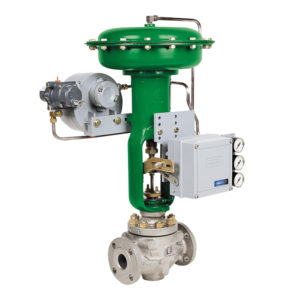
Remanufactured
Fisher Valves
Modern remanufacturing processes reclaim used Fisher valves and rebuild them to original equipment manufacturer (OEM) published specifications—often at a fraction of the cost and with faster delivery. This guide explains what remanufactured Fisher valves are, how they are produced, the benefits of choosing them, and the range of control valves available.

Save 70 % of the
Purchase Price
Remanufactured valves can cut capital costs by up to 70 % compared with buying new equipment.
Short Lead Times
New factory lead times can run many months, we offer standard delivery within 2 weeks and expedited delivery in as fast as 24 Hours
Environmental Benefits
Remanufacturing reclaims parts instead of sending them to scrap, making the process environmentally friendly
Lorem
Lorem ipsum dolor sit amet, consectetur adipiscing elit.
Factory‑Level Reliability and Quality
Rigorous Testing and Certified Quality Management
Every valve is subjected to hydrostatic testing and seat‑leak testing to ANSI/ISA standards. Our Quality Management process is ISO 9001:2015 Certified for “Manufacture, remanufacture, and repair of industrial process controls and control valves, and distribution of accessories to customer specifications.”
OEM Specifications
Automation Service builds valves using OEM published specifications and the most current industry standards. Body wall thickness is verified to ASME B16.34 standards. Allsoft goods (gaskets, seals, O‑rings) are replaced with new. Other parts are manufactured as needed.
Documentation and Warranties
Each Automation Service remanufactured valve is accompanied by a post assembly validation checklist summarizing the results and is covered by a two‑year warranty from the installation date. This warranty matches or exceeds many OEM warranties!
Types of Remanufactured Fisher Control Valves
E‑Body sliding‑stem globe valves
V150 & V200 rotary V‑ball valves
V100 rotary ball valves
V300 rotary valves
V500 eccentric plug valves
8500 series butterfly valves
9500 lined butterfly valves
½ – 12 in; pressure classes 125–1500 ANSI
1 – 16 in; ANSI 150 (V150) and 150/300/600 (V200)
1 – 12 in; ANSI 150/300/600
1 – 16 in; ANSI 300
1 – 8 in; ANSI 150/300/600 (flanged or flangeless)
2 – 30 in; ANSI 150/300/600
2 – 12 in; ANSI 150/300
WCB, CG8M, cast‑iron and exotic alloy bodies; Class II–VI shut‑off options; full or restrictive trim with balanced/unbalanced designs; PTFE V‑ring or graphite packing
WCC/CG8M bodies; choice of seals (TCM, 316 metal, heavy‑duty alloy 255/Nitronic 60/Alloy 6) Robust bearings (316/PTFE, PEEK, Alloy 6)
Carbon or stainless‑steel bodies; TCM or 316 metal seals; bearings in 316/PTFE or alloy 6
WCC/CG8M bodies; heavy‑duty seals (Alloy 255, Nitronic 60, Alloy 6) and PEEK or alloy bearings
WCC/CF8M bodies; plated or ceramic seals (316, Alloy 6, VTC ceramic); bearings in 440C or Alloy 6
WCB, WCC, CF8M or CG8M bodies; wafer or lugged body types; PTFE, 316, Novex or Phoenix III seals; 316/PTFE, nitride, or PEEK bearings
WCB/WCC/CF8M/CG8M/cast‑iron bodies; PTFE or nitrile liners; conventional or fishtail discs; PEEK/PTFE bearings
Note: Not all configurations are available in all sizes or pressure classes; consult engineers for sizing and selection.
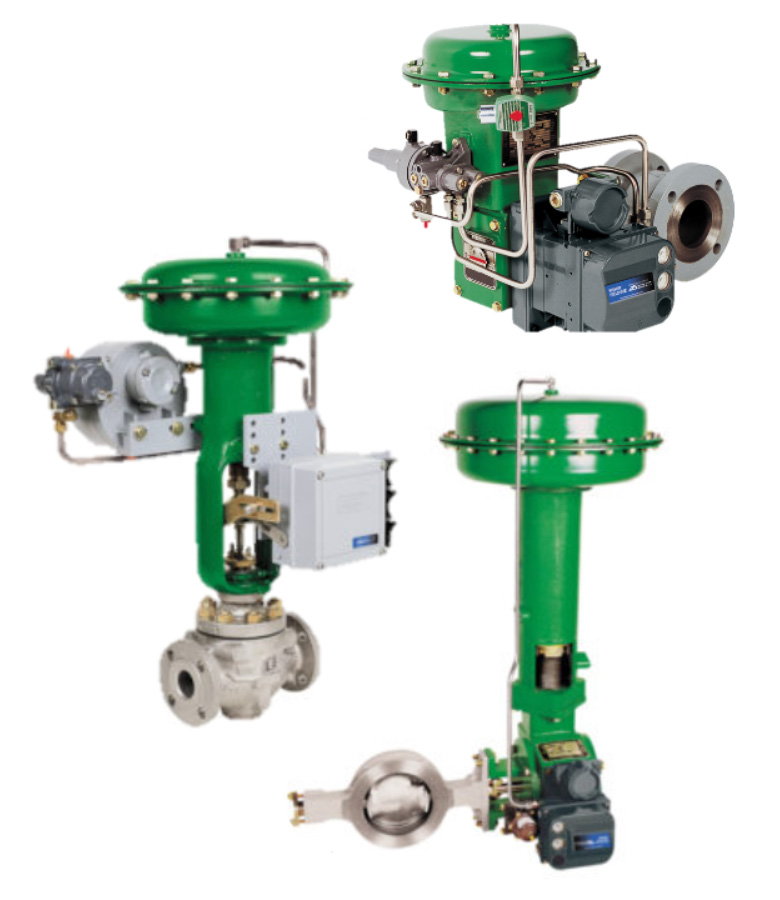
How Remanufactured Fisher Valves are Built
The remanufacturing process begins with recycling core
collection and inspection. Control valves are identified,
disassembled and each component inspected. Valve
bodies, bonnets, and other parts are inspected for corrosion,
cracks, or other quality concerns to determine whether to Recycle
or Remanufacture. Based on specified customer model code for
configuration, parts are selected from inventory. Experienced
technicians then build the valve according to OEM
published documents and specifications. Key steps include:
- Identification and Inspection. Valves are identified and an
inventory tag applied by Series, Size, Material, ANSI Rating,
and other criteria; Inspection is conducted before and during
each remanufacturing step for identification or quality
concerns - Dimensional checks and machining. Body wall thickness
is measured to ensure compliance with ASME B16.34.
Surfaces are machined to restore gasket and seat faces - Component replacement. Soft goods (seals, gaskets and
packing) are replaced with new materials. Other parts,
including Trim components—plugs, seats or Vballs—are
lapped, machined, manufactured, or replaced to achieve
proper shutoff - Assembly and calibration. Control Valves, Actuators,
and Positioners are built and each tested before fully
assembled; accessories such as air sets,
I/P transducers, or position switches may also be included. - Testing. Every valve undergoes hydrostatic testing to
ensure the body is leaktight, and seat leakage testing to
verify proper shutoff class. Optional tests include Positive
Material Identification (PMI) using Xray fluorescence to
verify alloys for material certification, control
valve diagnostics performance to measure travel, response
and hysteresis, ultrasonic thickness testing.
Benefits Compared to New Valves
Cost and budget flexibility
- Capital expenditure reduction. New Fisher control valves are expensive; remanufactured alternatives can save 30–70%.
- Reduced total cost of ownership. High‑quality remanufactured valves often include longer warranties than new products (two years vs. one year for some). The shorter lead times reduce downtime costs.
Equivalent performance
- Built to OEM tolerances. Remanufactured Fisher valves meet the same dimensional tolerances and material specifications as new valves.
- Certified testing. Automation Service tests to ANSI/ISA standards, ensuring mechanical integrity and tight shut‑off.
- Customised trim and materials. Customers can specify body materials (e.g., carbon steel, stainless steel, chrome‑moly, alloy 20, etc.) and choose special trims for corrosive or abrasive services
Sustainability
- Recycling reduces waste. Remanufacturing extends the useful life of valve bodies and actuators, diverting them from scrap. Automation Service runs a reclamation program where clients earn credits for recycling used controls.
- Environmental stewardship. Remanufactured valves are more environmentally friendly because they reuse materials and require less energy to produce
Selecting and Sizing Remanufactured Control Valves
Proper sizing and specification are essential for achieving accurate control and avoiding premature wear. Factors to consider include:
- Process conditions. Know the fluid (liquid, gas, slurry), operating pressure, temperature and flow range. Determine whether you need on–off service or precise throttling.
- Shut‑off class. Control valves are available in Class II–VI shut‑off ratings. Applications requiring tight closure (e.g., steam isolation) may need Class V or VI.
- Valve/actuator sizing. A properly sized actuator must generate enough force to move the plug or ball under worst‑case conditions. Consider the bench set and spring range when selecting actuators.
- Materials and trim. Choose body and trim materials compatible with the process. For corrosive or erosive fluids, specify alloy trims (e.g., Alloy 6 or ceramic coatings) and bearing materials like PEEK.
- Accessories. Positioners, I/P transducers and air sets can improve accuracy.
Automation Service’s engineers can assist with sizing and specification.

Frequently asked questions
Are remanufactured valves as reliable as new ones? Yes—when rebuilt by reputable suppliers and tested according to ANSI/ISA standards, remanufactured valves can match the performance of new equipment. Automation Service builds valves to published OEM specifications and backs them with warranties.
What warranty do remanufactured Fisher valves carry? Automation Service offers a two‑year warranty starting from the installation date.
Which industries use remanufactured Fisher valves? Remanufactured control valves are common in chemical, petrochemical, pulp & paper, water/wastewater, power generation and other process industries.